Omoggle Guide Article
Omoggle vs Omegle: What Changed in Random Video Chat?
Omoggle vs Omegle explained: compare the AI mog battle format, official website, privacy risks, age rules, and safer random video chat alternatives before using webcam access.
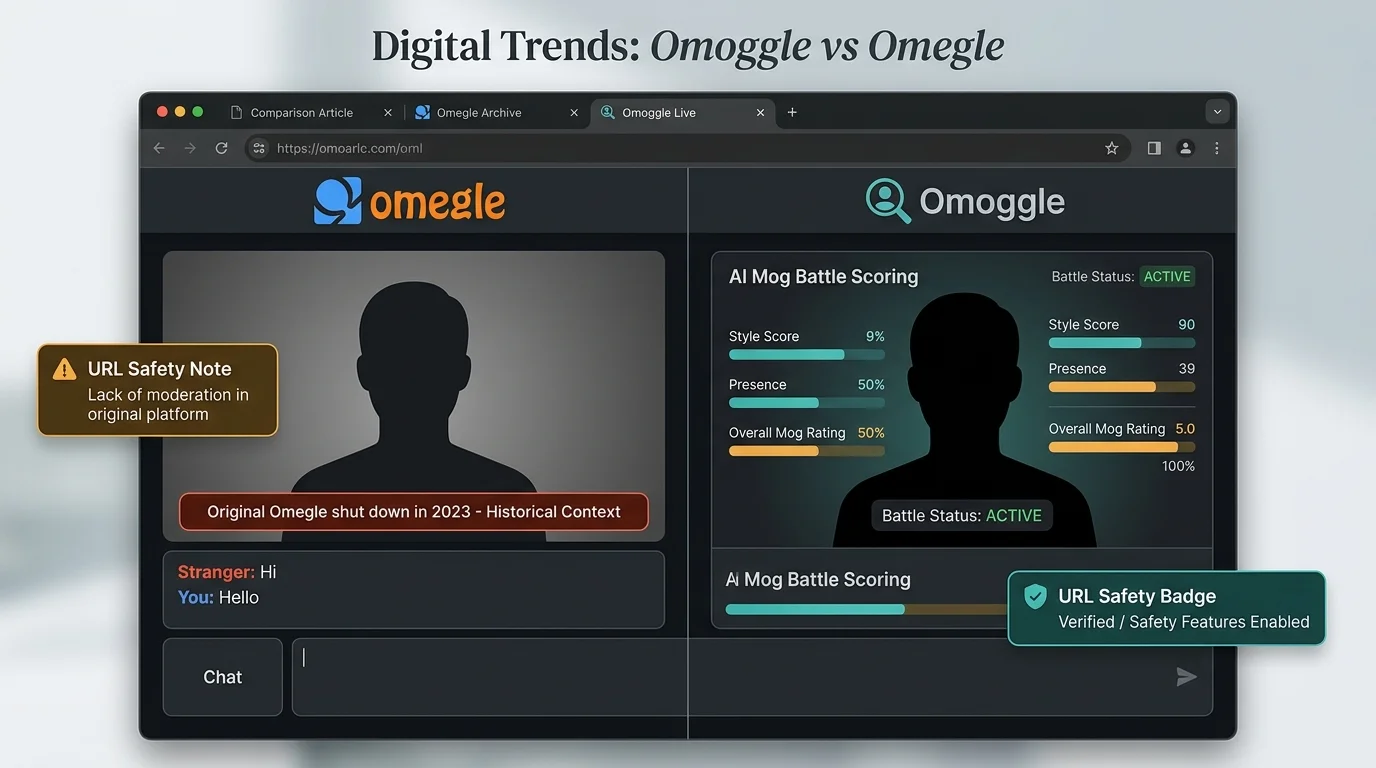
Omoggle vs Omegle is not just a name comparison. Omegle was the classic anonymous random chat site: you opened a page, matched with a stranger, and talked until one person disconnected. Omoggle keeps the stranger webcam premise, but turns it into a short AI judged mog battle with scores, ELO, and ranks.
That shift matters. If you are searching for Omoggle because you miss Omegle, you may be looking for the wrong kind of experience. Omoggle is more competitive, more clip-friendly, and more tied to appearance scoring than classic random chat ever was.
Omoggle vs Omegle: the short answer
Omegle was an open-ended random chat platform. It launched long before modern short-form video culture and became known for anonymous text and webcam conversations. The original Omegle shut down in November 2023, so any current site using the Omegle name is a clone or replacement, not the original service coming back.
Omoggle is different. The current Omoggle format pairs two webcam users for roughly 10 to 15 seconds, runs an AI face score, names a winner, and updates competitive ranking signals. If Omegle was a conversation lottery, Omoggle is a fast face battle game.
The official Omoggle website guide on this site explains the current URL and clone risks: check the Omoggle website before granting camera access.
What Omegle did well
Omegle was simple. There was no leaderboard, no face score, no public rank ladder, and no promise that the next person would be similar to you. That simplicity created both its appeal and its problems.
People used Omegle because it felt unpredictable. A session could become a normal conversation, a language exchange, a joke, or an uncomfortable moment. The platform’s weakness was the same category risk that still applies to random webcam tools today: strangers are hard to moderate, and users cannot fully control what appears on the other side of the camera.
That is why “Omegle replacement” is not the same search intent as “Omoggle.” Replacements usually try to recreate random conversation. Omoggle tries to create a competitive result.
What Omoggle changes
Omoggle adds a game loop to random video chat. Instead of asking, “Who will I meet?” the page asks, “Who wins this round?” The AI mog battle format changes the psychology of the session.
The most important changes are:
- The match is short, usually around 10 to 15 seconds.
- The AI returns a visible face score.
- The winner and loser are labeled as part of the game.
- ELO and rank language can make the result feel sticky.
- Streamer clips make losses, glitches, and awkward scores more shareable.
For a full breakdown of the match sequence, read the Omoggle mog battle rules.
Omoggle vs Omegle on privacy
Omoggle’s AI layer does not remove webcam risk. Even if face analysis is described as browser based, the other person can still see your camera feed during the match. They may also record their own screen locally.
That distinction is easy to miss. Platform privacy and opponent behavior are separate questions. A platform can limit what it stores while still exposing you to someone who records, screenshots, or recognizes details in your background.
Before using any random webcam platform, remove personal identifiers from the frame: school names, work badges, address signs, family photos, notifications, and browser tabs with your real name. The Omoggle safety guide covers the practical checklist.
Omoggle vs Omegle on age and moderation
Omegle’s long history included serious moderation problems, especially around minors and inappropriate behavior. Omoggle should be treated as an 18+ experience because it is still random webcam matching with strangers.
Minors should not use Omoggle. Adults who match with someone who appears underage should disconnect immediately and use any available report tools. No score, clip, or leaderboard position is worth staying in a risky match.
This is the part where a lot of SEO pages get too soft. They say “be careful” and move on. That is weak advice. If you cannot accept that a stranger may record the session, you should not enter a public webcam queue.
Should you use Omoggle if you miss Omegle?
Use Omoggle only if you specifically want the AI mog battle format and understand the tradeoff. It is not a neutral Omegle replacement. It is a competitive face-rating game built on top of random webcam matching.
If you want conversation without appearance scoring, compare other random chat tools instead. If you want lower risk, the best answer may be not joining a public webcam queue at all. The comparison guide to sites like Omoggle separates classic random chat, mobile-first video apps, and interest-based options.
Omoggle vs Omegle FAQ
Is Omoggle the same as Omegle?
No. Omegle was a random text and video chat platform that shut down in 2023. Omoggle is a separate AI mog battle site that uses short webcam matches and face scoring.
Is the original Omegle back?
No. The original Omegle is not active. Sites using the Omegle name today are independent clones or replacements.
Is Omoggle safer than Omegle?
Not automatically. Omoggle has a different format, but it still involves webcam exposure to strangers. The AI score does not prevent another user from screen recording or behaving badly.
Which is better: Omoggle or an Omegle clone?
It depends on intent. Choose Omoggle only if you want the competitive AI face battle. Choose an Omegle-style clone only if you want classic random chat and accept the privacy and moderation risk.
What should I check before trying Omoggle?
Check the official URL, read the current privacy language, confirm you are 18 or older, remove personal identifiers from your camera frame, and be ready to leave immediately.